
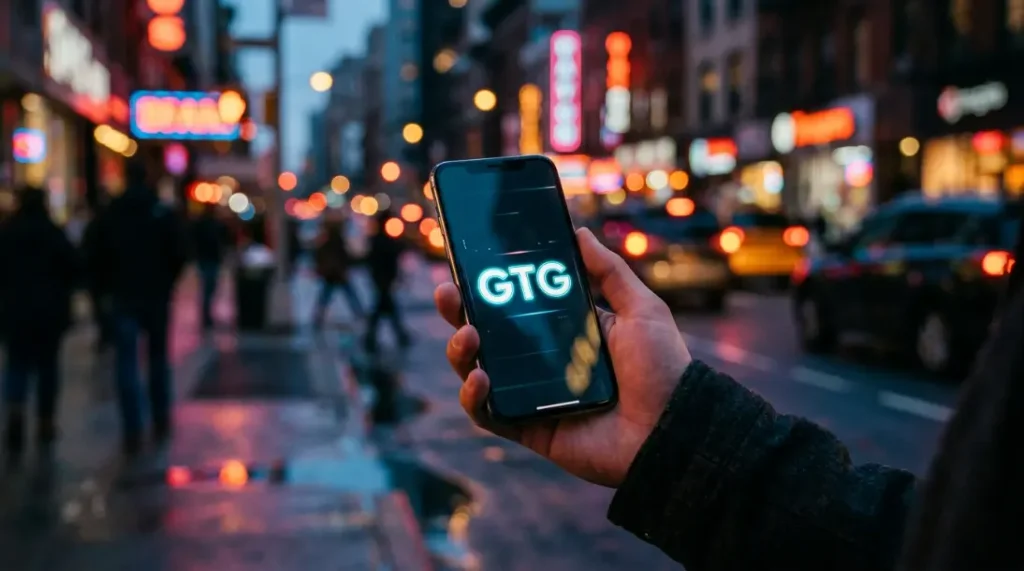
GTG usually means “got to go” in text messages and online chats. People use it when they need to leave a conversation, stop chatting, or do something else. It is a quick, casual way to say goodbye without typing a full sentence.
For example:
- Friend 1: “Want to keep playing?”
- Friend 2: “Sorry, gtg. My mom is calling me.”
- Meaning: “Sorry, I have to go. My mom is calling me.”
When someone sends you GTG, they are usually letting you know that they are leaving the conversation. It does not automatically mean they are upset, bored, or trying to avoid you.
What Does GTG Meaning in Text Stand for?
GTG is a short written abbreviation made from the first letters of a phrase. In everyday messages, it has two main interpretations:
- Got to go: The person needs to leave or end the conversation.
- Good to go: Someone or something is ready, prepared, or cleared to proceed.
The Cambridge English Dictionary lists gtg as a written abbreviation for “got to go.” The second meaning, “good to go,” is also recognized in messaging and informal communication.
Here is the easiest way to remember the difference:
| Message | Meaning | What the sender means |
|---|---|---|
| “GTG, my class is starting.” | Got to go | I need to leave now. |
| “I’m GTG for the trip.” | Good to go | I’m ready for the trip. |
| “Everyone GTG?” | Good to go? | Is everyone ready? |
| “Sorry, gtg. Talk later!” | Got to go | I have to go; we can chat later. |
Although both meanings are useful, the surrounding conversation matters more than the letters themselves. If someone sends GTG as a goodbye, read it as “got to go.” If they are discussing plans, preparation, or starting an activity, “good to go” may fit better.
GTG Meaning in Text Messages
In text messages, GTG is a convenient way to tell another person that you cannot continue chatting at the moment. It can signal that you are leaving home, starting work, attending class, going to sleep, or simply putting your phone away.
Instead of writing a full sentence such as “I have to go now because my bus is here,” you can write a shorter message.
For example:
Example 1: Leaving for school
- Friend: “Are you coming online?”
- You: “Not now, GTG. I have school.”
- Meaning: You need to leave because you have to go to school.
Example 2: Ending a friendly conversation
- Friend: “I had fun talking to you!”
- You: “Same! GTG, talk to you tomorrow.”
- Meaning: You enjoyed the conversation but need to leave.
Example 3: Getting ready for bed
- Friend: “Want to watch another episode?”
- You: “No, gtg. I’m really tired.”
- Meaning: You are ending the chat because you want to rest.
Example 4: An unexpected interruption
- Friend: “Tell me what happened next!”
- You: “GTG, my dad needs help.”
- Meaning: Something else needs your attention, so you have to stop chatting.
Example 5: Going somewhere
- Friend: “Are you still at home?”
- You: “Yeah, but GTG. My ride is here.”
- Meaning: You need to leave now.
In all these examples, GTG communicates the same basic idea: the sender has to go. The extra words explain why or make the goodbye feel friendlier.
The Alternative Meaning of GTG: Good to Go
GTG does not always mean someone is leaving. In some conversations, it means “good to go,” an expression used to say that a person is ready or that something is prepared and can proceed.
This interpretation often appears when people discuss plans, assignments, equipment, gaming sessions, or upcoming activities.
Consider these examples.
Example 1: Making plans
- Friend: “Are you ready to leave for the restaurant?”
- You: “Yep, I’m GTG.”
- Meaning: You are ready to leave.
Example 2: Preparing for an exam
- Friend: “Have you finished revising?”
- You: “Almost everything. I should be GTG by tonight.”
- Meaning: You expect to be ready by tonight.
Example 3: Gaming
- Player 1: “Can we start the match?”
- Player 2: “Everyone’s GTG.”
- Meaning: Everyone is ready to begin.
Example 4: Finishing a task
- Coworker: “Are the slides ready for the meeting?”
- You: “Yes, we’re GTG.”
- Meaning: The slides are ready to use.
Example 5: Preparing for a trip
- Friend: “Got your bags packed?”
- You: “All packed. I’m GTG!”
- Meaning: You are prepared to go.
Notice that the last example mentions going somewhere, but GTG still means “good to go” because the sender is confirming readiness rather than ending the conversation.
How to Tell the Two Meanings Apart
Use the surrounding words to work out the intended meaning.
| Clue in the message | Likely interpretation |
|---|---|
| “GTG, talk later!” | Got to go |
| “Sorry, I have a meeting. GTG.” | Got to go |
| “I’m GTG whenever you are.” | Good to go |
| “Are we GTG for tomorrow?” | Good to go |
| “Everyone GTG before we start?” | Good to go? |
These are useful clues rather than absolute rules. When the message is too short to interpret confidently, you can ask the sender what they mean.
Is GTG Meaning in Text Slang, an Acronym, or an Abbreviation?
GTG is commonly described as internet slang or a texting abbreviation. More precisely, it is an initialism when it stands for “got to go” or “good to go,” because people generally pronounce its letters individually rather than as one word.
It is useful to understand the distinction:
- Abbreviation: A shortened written form of a word or phrase.
- Initialism: A shortened form made from initial letters that are pronounced separately.
- Acronym: A shortened form made from initial letters that is pronounced as a word.
In everyday conversation, people often use “acronym” as a broad term for internet abbreviations, so calling GTG an acronym is common. However, initialism is the more precise linguistic description.
GTG is also informal digital language. It is designed for quick communication rather than formal writing. You may see it in personal texts, direct messages, group chats, online games, and casual workplace messaging.
Does GTG Meaning in Text the Same Thing on Snapchat, WhatsApp, Instagram, and TikTok?
Generally, yes. GTG does not have a completely different standard meaning on each social media platform. The basic interpretations remain “got to go” and “good to go,” while the situation determines which one makes sense.
GTG Meaning in Text on Snapchat
On Snapchat, GTG usually signals that someone is ending a conversation or leaving the chat.
Example:
“gtg, my phone is about to die 😭”
Meaning: The person needs to stop chatting because their phone battery is nearly empty.
A message like “I’m GTG for tonight” could also mean the sender is ready for an upcoming plan, depending on the context.
GTG Meaning in Text on WhatsApp
On WhatsApp, people may use GTG in individual chats or group conversations when they need to leave.
Example:
“GTG now, I’ll message you after work.”
Meaning: The sender has to go and plans to message again later.
GTG Meaning in Text on Instagram
In Instagram direct messages, GTG works as a casual sign-off.
Example:
“Loved talking to you! GTG, see you tomorrow.”
Meaning: The conversation is ending for now.
GTG Meaning in Text on TikTok
In TikTok messages or live-chat conversations, GTG can indicate that someone is leaving a chat, ending a viewing session, or moving on to another activity.
Example:
“GTG, everyone. Thanks for the laughs!”
Meaning: The person is signing off.
GTG Meaning in Text in Online Games and Discord
Gaming conversations can use both meanings, making context especially important.
- “GTG after this round.” — The player needs to leave after the round.
- “Team, everyone GTG?” — The player is asking whether everyone is ready.
- “I’m GTG for the tournament.” — The player is ready for the tournament.
The platform itself does not determine the meaning. The message and the conversation around it do.
Is GTG Meaning in Text Rude or Does It Sound Impolite?
No, GTG is not inherently rude. In most casual conversations, it is a neutral and practical way to let someone know that you need to leave.
However, the way it feels can depend on the conversation, your relationship with the sender, and what was being discussed.
When GTG Meaning in Text Sounds Friendly
A friendly message often includes a goodbye, a reason for leaving, or an indication that the conversation can continue later.
Example:
“GTG now 😊 Talk to you tomorrow!”
This sounds warm because the sender acknowledges the other person and suggests future contact.
When GTG Meaning in Text Sounds Neutral
Example:
“gtg, class starts in five minutes.”
This is straightforward. The sender is explaining that they need to leave without adding much emotion.
When GTG Meaning in Text Might Sound Abrupt
Example:
- Friend: “Can I tell you something important?”
- You: “gtg.”
The reply might feel dismissive because the other person was preparing to share something important. Still, the abbreviation alone does not prove that the sender intended to be rude.
They might have an urgent responsibility or be unable to continue at that moment.
A more considerate alternative would be:
“Sorry, I have to go right now. Can we talk about it later?”
The lesson is simple: GTG communicates that you need to leave, but the surrounding words communicate how considerate or abrupt you sound.
How to Reply When Someone Texts GTG
Your reply should depend on what the person means and how the conversation is going. You do not need to write a long response every time someone says they have to go.
Here are some natural replies.
| Their message | Possible reply |
|---|---|
| “GTG, bye!” | “Okay, bye!” |
| “Sorry, GTG. Talk later.” | “No problem, talk later!” |
| “GTG, my class is starting.” | “Good luck with class!” |
| “GTG, good night.” | “Good night, sleep well!” |
| “GTG, see you tomorrow.” | “See you tomorrow!” |
| “I’m GTG for the trip.” | “Great, see you there!” |
| “Everyone GTG?” | “Yep, ready!” |
Short and Casual Replies
If you are texting a friend, these responses are usually enough:
- “Okay, ttyl!”
- “No worries.”
- “Catch you later!”
- “See ya!”
- “Take care!”
- “Bye, talk soon!”
Friendly Replies
If you want to keep the conversation warm, try:
- “Okay, take care! 😊”
- “No problem, message me when you’re free.”
- “Alright, have a great day!”
- “Sure, we’ll talk later.”
When GTG Means Good to Go
If the sender is asking whether you are ready, respond to the plan rather than treating the message as a goodbye.
For example:
- Friend: “Everyone GTG?”
- You: “Yep, let’s start!”
Or:
- Friend: “Are we GTG for Saturday?”
- You: “Yes, everything is set.”
Tip: If someone clearly says they need to leave, respect their time. A simple acknowledgment is usually better than pressuring them to stay in the conversation.
GTG vs. G2G: What’s the Difference?
GTG and G2G are closely related texting shortcuts. Both can mean “got to go,” and people often use them interchangeably in casual messages.
The main difference is how they are written: GTG uses the letter T, while G2G uses the number 2 as a shorthand for “to.”
| Abbreviation | Meaning | Example |
|---|---|---|
| GTG | Got to go | “GTG, dinner is ready.” |
| G2G | Got to go | “G2G, my ride is here.” |
Both messages communicate that the sender needs to leave.
The number 2 is a familiar feature of text shorthand, as in expressions such as “B2B” in certain contexts or “2day” for “today.” However, these shortcuts do not all follow the same conventions.
For ordinary texting, you can use GTG or G2G when you want to say that you need to go.
GTG vs. BRB
GTG and BRB both appear when someone needs to interrupt a conversation, but they communicate different expectations.
- GTG: Got to go. The sender is leaving or ending the current exchange.
- BRB: Be right back. The sender expects to return after a short absence.
Compare these messages:
GTG example:
“GTG, I have to leave for work.”
The sender is leaving and may not return to the conversation soon.
BRB example:
“BRB, someone is at the door.”
The sender is briefly stepping away and expects to come back.
| Feature | GTG | BRB |
|---|---|---|
| Full form | Got to go | Be right back |
| Main purpose | Signal departure | Signal a temporary pause |
| Expected return | Not necessarily soon | Usually soon |
| Typical example | “GTG, talk later!” | “BRB, getting water.” |
The easiest way to remember the difference is that GTG signals leaving, while BRB signals a temporary break.
GTG vs. TTYL
TTYL stands for “talk to you later.” Like GTG, it can appear at the end of a casual conversation, but it emphasizes a different idea.
GTG tells someone that you need to leave. TTYL suggests that you expect to talk again later.
For example:
- “GTG, my bus is here.” — I need to leave now.
- “TTYL!” — I’ll talk to you later.
- “GTG, TTYL!” — I need to leave now, but we can talk later.
The two abbreviations can work together naturally.
If you want to tell someone that you are leaving and would like to continue the conversation another time, “GTG, TTYL!” communicates both ideas in just a few characters.
GTG vs. AFK
AFK stands for “away from keyboard.” It is particularly familiar in gaming and online communication.
Although GTG and AFK can both indicate that someone is no longer available, they are not exactly the same.
| Abbreviation | Meaning | Example |
|---|---|---|
| GTG | Got to go | “GTG, see you tomorrow.” |
| AFK | Away from keyboard | “AFK for five minutes.” |
| BRB | Be right back | “BRB, grabbing a snack.” |
| TTYL | Talk to you later | “TTYL, have a good night.” |
AFK focuses on being away from the device or keyboard. It does not necessarily mean the person has ended the conversation for good.
GTG is more directly associated with leaving or signing off.
For example, a gamer might say “AFK for a minute” when briefly stepping away from the computer. If the same player says “GTG, good game,” they are signaling that they need to leave the session.
GTG vs. Goodbye
GTG and goodbye can communicate a similar idea, but they differ in style.
“Goodbye” is a complete, widely understood expression that works in casual and formal situations. GTG is a shortened, informal expression that usually explains that the sender needs to go.
Compare:
- “Goodbye. I need to leave now.” – Clear and neutral.
- “GTG, bye!” — Quick and casual.
- “I have to leave now. Thank you for your time.” – More appropriate in a professional setting.
If you are texting friends, GTG is often convenient. If you are communicating with a customer, teacher, employer, or someone you do not know well, a complete sentence is generally clearer.
How to Use GTG Naturally in a Sentence
GTG is flexible in informal messages. You can place it at the beginning or end of a message, or use it as a short standalone sign-off.
1. At the Beginning of a Message
Use GTG first when you want to announce that you are leaving before explaining why.
Examples:
- “GTG, my class is about to start.”
- “GTG, my parents are waiting.”
- “GTG, the taxi is here.”
This arrangement immediately communicates that you need to leave.
2. At the End of a Message
You can put GTG at the end when the reason comes first.
Examples:
- “Dinner is ready, GTG!”
- “My battery is almost dead, gtg.”
- “I have an early meeting tomorrow, GTG.”
Both arrangements are natural in informal digital conversations.
3. As a Standalone Message
Sometimes, a simple sign-off is all you need.
Examples:
- “GTG!”
- “Sorry, gtg.”
- “Okay, GTG. Bye!”
These messages are short and easy to understand when the conversation is already casual.
4. To Confirm Readiness
When GTG means “good to go,” use it to indicate that a person or task is ready.
Examples:
- “I’m GTG for the meeting.”
- “We’re GTG for the weekend.”
- “The files are GTG.”
- “Are you GTG?”
If the recipient might misunderstand the abbreviation, writing “good to go” in full is a better choice.
Should You Use GTG Meaning in Text in Professional Messages?
GTG is generally best suited to informal communication. It can be acceptable in a relaxed team chat where colleagues regularly use abbreviations, but it is not ideal for formal emails, business proposals, academic writing, or messages to unfamiliar clients.
For example:
Casual workplace chat:
“GTG, I’ll send the notes this afternoon.”
More professional version:
“I need to leave now, but I’ll send the notes this afternoon.”
Similarly, if you want to confirm that a project is ready, you could write:
“Everything is ready for the presentation.”
This is clearer than “Everything is GTG” for readers who may not recognize the abbreviation.
The important point is to match your language to your audience. Shortcuts can make communication efficient, but clarity and professionalism matter more when the message has practical consequences.
Does Capitalization Change the Meaning of GTG Meaning in Text?
No. GTG, gtg, and Gtg generally represent the same abbreviation.
Examples:
- “GTG, see you later!”
- “gtg, see you later!”
- “Gtg, see you later!”
All three can mean “got to go.”
Capital letters may make an abbreviation stand out, while lowercase letters can fit the relaxed style of a personal message. However, capitalization does not reliably distinguish “got to go” from “good to go.”
You need to look at the sentence and the situation.
Where Did GTG Meaning in Text Come From?
GTG belongs to the broader tradition of shorthand used in online chats, instant messaging, and text messages. Digital conversations often encourage brief expressions because people want to communicate quickly without typing complete sentences.
Other familiar abbreviations include BRB, LOL, AFK, and TTYL. GTG fits naturally into the same style of communication.
Its structure is straightforward: the letters represent the words in “got to go.” The same letters can also represent “good to go,” which explains why the surrounding context is important.
It is difficult to identify a definitive first use or inventor from the available evidence, so it would be misleading to assign GTG a precise origin date without a reliable historical source.
Today, the abbreviation remains useful wherever informal digital communication is common. Its meaning is not tied to a particular generation or one specific messaging platform.
Common Mistakes to Avoid When Interpreting GTG Meaning in Text
Although GTG is easy to understand in most situations, a few common misunderstandings are worth avoiding.
Mistake 1: Assuming GTG always means “got to go.”
It can also mean “good to go.” A message such as “I’m GTG for tomorrow” may be confirming readiness rather than ending the chat.
Mistake 2: Assuming the sender is angry.
A short sign-off does not automatically indicate annoyance. The sender may simply be busy or need to leave.
Mistake 3: Confusing GTG with BRB.
GTG generally signals departure, while BRB indicates a temporary break.
Mistake 4: Treating GTG and G2G as completely different expressions.
They are commonly used as alternative forms when someone means “got to go.”
Mistake 5: Using GTG when clarity is important.
In a formal email or important work message, spelling out the intended phrase can prevent confusion.
Mistake 6: Guessing when the context is unclear.
If a message could mean either leaving or readiness, ask a short follow-up question instead of assuming.
These simple distinctions will help you understand GTG more accurately in everyday conversations.
FAQs About GTG Meaning in Text
1. What does GTG mean in text?
GTG usually means “got to go.” It is an informal abbreviation used when someone needs to leave a conversation or stop chatting. It can also mean “good to go” when the context is about being ready.
2. What does GTG stand for in texting?
GTG most commonly stands for “got to go.” In some contexts, it stands for “good to go,” meaning ready, prepared, or able to proceed.
3. Does GTG mean goodbye?
Not exactly. GTG means “got to go,” so it signals that someone needs to leave. It often functions as a goodbye, especially when combined with phrases such as “talk later” or “see you soon.”
4. What does GTG mean from a girl?
If a girl sends GTG in a text, it generally has the same meaning as it does when anyone else uses it: “got to go.” It does not automatically mean she is upset, uninterested, or avoiding you. Read the message in the context of your conversation.
5. What does GTG mean from a guy?
When a guy texts GTG, he usually means that he needs to leave or stop chatting. The abbreviation alone does not reveal his feelings or intentions. The surrounding conversation provides more useful clues.
6. What does GTG mean from a friend?
A friend who sends GTG is usually saying that they need to go. They might have school, work, family responsibilities, or another activity. You can reply with “Okay, talk later!” or “No problem!”
7. What does GTG mean in a relationship?
In a romantic conversation, GTG generally means “got to go.” It is not automatically a sign of rejection, loss of interest, or anger. If you are concerned about a change in someone’s communication, consider the wider pattern rather than interpreting one abbreviation on its own.
8. What does GTG mean in gaming?
In gaming, GTG can mean either “got to go” or “good to go.” A player saying “GTG after this match” needs to leave, while someone asking “Everyone GTG?” is usually checking whether everyone is ready.
9. What does GTG mean when someone sends only “gtg”?
A standalone “gtg” most commonly means “got to go.” It is a quick way to end a conversation. Unless other context suggests otherwise, you should not assume the sender is angry or trying to be rude.
10. Is GTG the same as G2G?
Yes, in many casual conversations. Both GTG and G2G are used to mean “got to go.” The number 2 represents the word “to” in G2G.
11. What is the difference between GTG and BRB?
GTG means “got to go,” while BRB means “be right back.” GTG generally signals that someone is leaving, whereas BRB suggests a temporary absence and an expected return.
12. What does “I’m GTG” mean?
“I’m GTG” often means “I’m good to go,” or “I’m ready.” For example, if a friend asks whether you are prepared for a trip, replying “I’m GTG” means you are ready.
Conclusion
GTG meaning in text is usually “got to go.” It is a casual abbreviation people use to let others know they need to leave a conversation, stop chatting, or move on to another activity. In other contexts, GTG can mean “good to go,” indicating that someone or something is ready.
The easiest way to understand it is to look at the surrounding message. If the sender is signing off, GTG probably means “got to go.” If the conversation is about plans, preparation, or starting something, it may mean “good to go.”
You can use GTG naturally with friends, family, and people you know well. When you need a more professional tone or want to avoid ambiguity, write the complete phrase instead.

I’m Andy Butler, the founder and writer behind NamesGala.com, where I explore the meanings, origins, history, and stories behind names. I’m passionate about making name research simple, interesting, and useful for everyone. My goal is to help readers discover the story and significance behind every name.