
Alaric
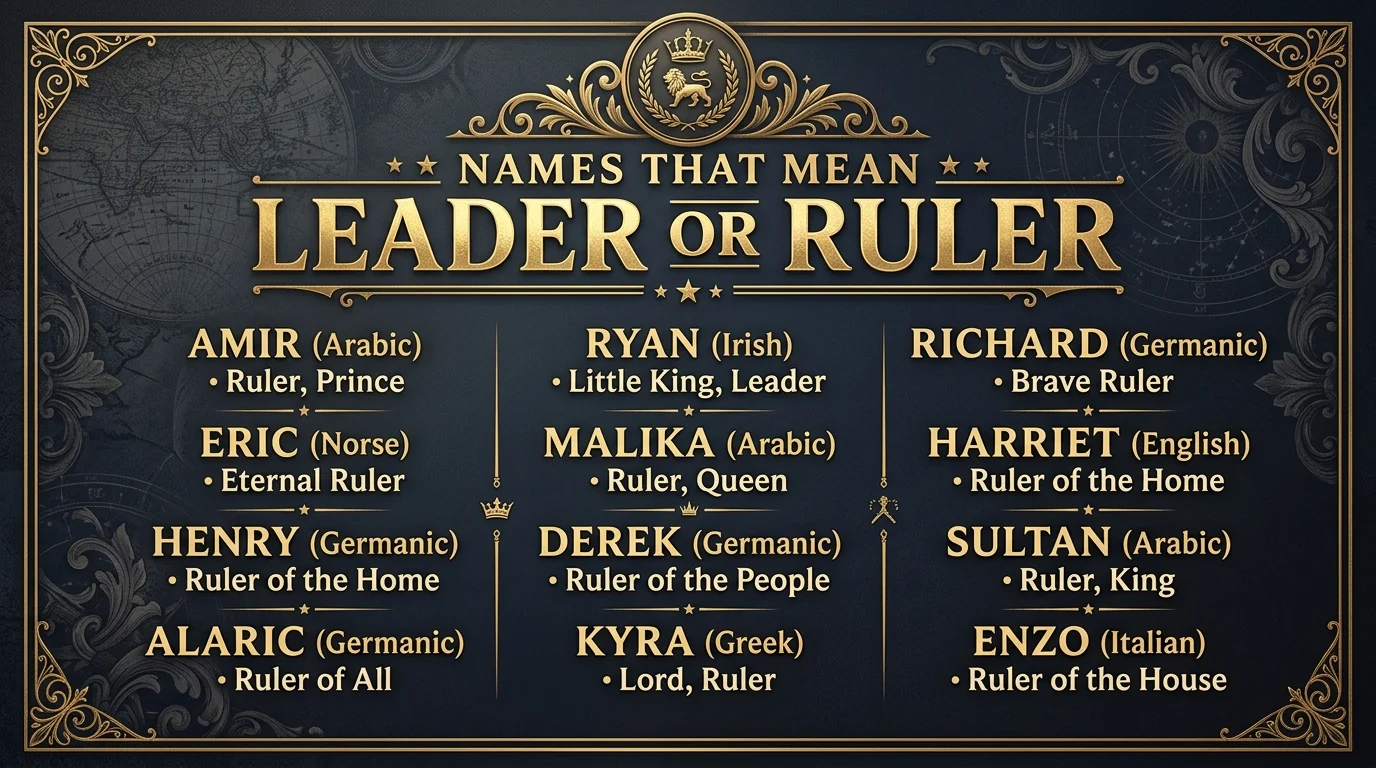
Alaric (German/Norse) — “everyone’s powerful ruler.” The name behind Alaric I, the Visigothic king best known for sacking Rome in 410 AD — a reminder that raw power was the original meaning of “leader” in most ancient languages, long before the word picked up softer connotations.
Derek
Derek (English/German) — “people ruler,” from the older Theodoric. Unlike Alaric, the emphasis here is specifically on ruling people, not territory or armies — an early linguistic nod to leadership as a relationship, not just a position.
Donald
Donald(English/Scottish Gaelic) — “world ruler,” from the Gaelic Domhnall. One of the oldest recorded Scottish names, carried by kings of Scotland centuries before it became common.
Duke
Duke(Anglo-Norman) — “leader,” from the Latin dux, the same root that gives English “duke” as a title. Originally a Roman military rank for a commander, not a hereditary title — leadership as a job, not a birthright.
Enrique
Enrique(Spanish, from Germanic Heinrich) — “home-ruler” or “ruler of the household.” A smaller-scale version of leadership than kings and conquerors: the name literally scopes leadership down to the domestic sphere.
Enzo
Enzo(Italian/German, short form of Enzio/Heinz) — “power, ruler.” Popularized partly by Enzo Ferrari, whose surname now means something closer to “speed” than “leadership” in most people’s minds — a reminder that a name’s popular association can drift far from its literal meaning.
Kendra
Kendra(Old English) — “high chief, wise ruler.” One of the few names on this list that pairs the leadership meaning directly with wisdom rather than just authority or strength.
Leroy
Leroy(Norman French) — literally “the king,” from le roi. About as direct as a name gets — no metaphor, no derivation, just the title itself.
Rory
Rory(Scottish/Irish Gaelic) — “king,” from Ruaidhri. Common across both Scottish and Irish naming traditions, and one of the rare “ruler” names that reads as approachable rather than imposing in modern usage.
Ryan
Ryan(Irish Gaelic) — “little king.” The diminutive is the interesting part: even ancient naming traditions distinguished between a full sovereign and a smaller-scale leader — someone in charge, just not of everything.

I’m Andy Butler, the founder and writer behind NamesGala.com, where I explore the meanings, origins, history, and stories behind names. I’m passionate about making name research simple, interesting, and useful for everyone. My goal is to help readers discover the story and significance behind every name.